Why data-driven architecture is overtaking diagram-driven modelling, and how modern defence and civilian organisations can prepare for the shift
Introduction
Across government, industry and defence, Enterprise Architecture (EA) is undergoing a profound transformation these years. What was once a diagram-centric discipline, deeply dependent on hand-crafted models, notations and element-by-element drawing, evolves gradually into something entirely different. Architecture is increasingly expected to be dynamic, living, interconnected and owned by the business or operational leadership. It must reflect real-world changes in near real time; it must support delegation and distributed ownership; and it must provide decision-makers with analysis, not static diagrams.
This shift is not limited to civilian digital organisations. The defence sector is experiencing an even stronger pull towards data-driven architecture these years. NATO nations in particular face rising demands for interoperability, cross-domain operational insight, system-of-systems integration, and strategic-to-operational traceability. The complexity of defence missions, capability planning, readiness assessment and cross-vessel, cross-platform orchestration makes a purely diagrammatic approach not just impractical but largely obsolete.
NAF and UAF – what is it?
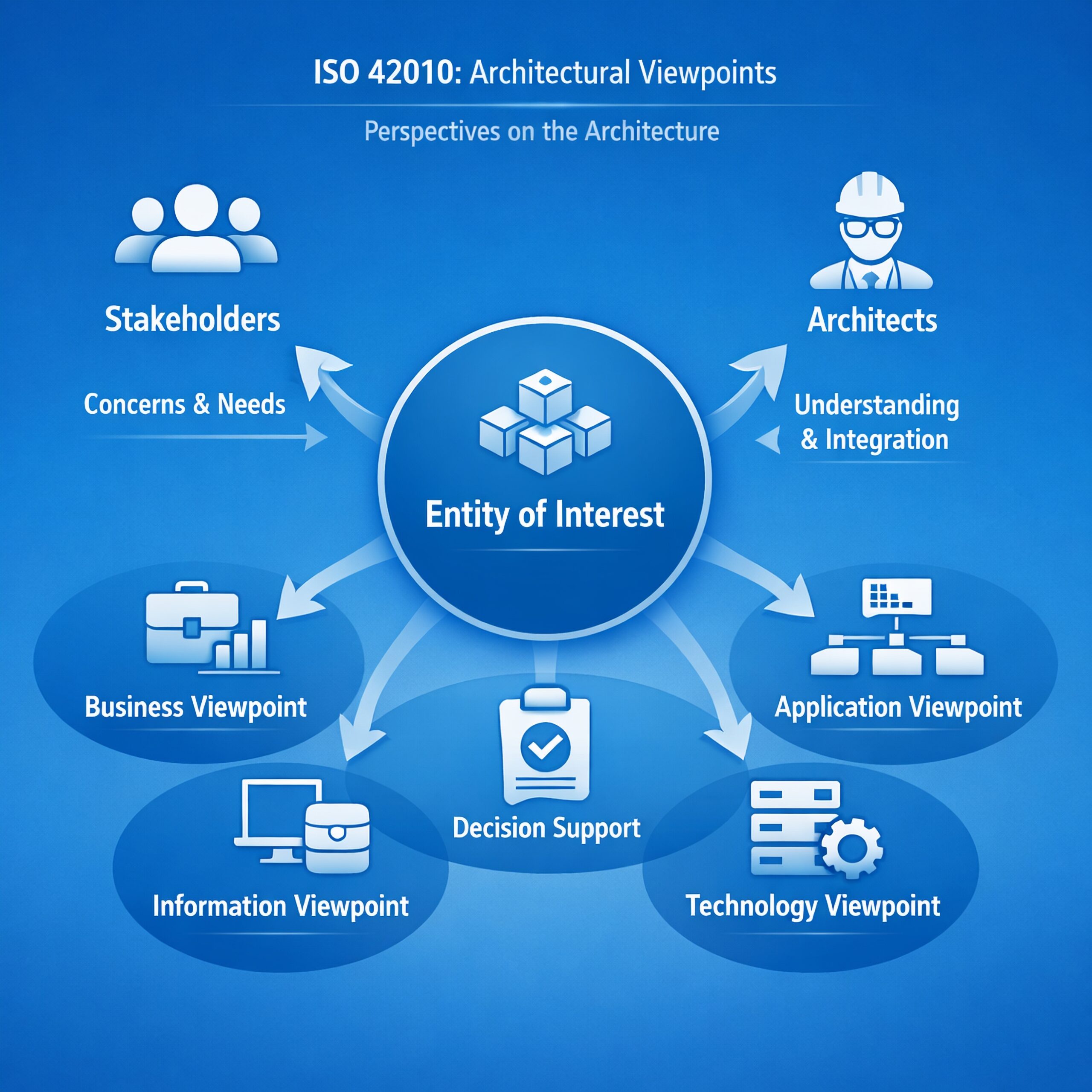
Within this context, two architectural frameworks play central roles: NAF (NATO Architecture Framework) v4 and UAF (Unified Architecture Framework) v1.2. NAF provides the conceptual structure and viewpoints required to communicate, assess and govern architectures across NATO.
UAF provides the semantic depth, the rigorous metamodel if you like, that is necessary to describe military capabilities, missions, operations, systems and physical platforms.
At the same time, modern tooling is moving firmly away from bit-level, element-by-element diagramming. Organisations are replacing drawing tools with data-driven architecture platforms, designed around metamodels, governance, automation and portal-based interaction. Among these platforms, MooD is unusual: it can support both diagram-based and data-based approaches, but its true strength lies in its ability to act with model-masters; a type-based approach with data-first supporting a dynamic, customisable, information-rich platform that integrates governance, interaction and decision support.
This article explores the future of both civilian and defence architecture, clarifies the roles in respect of NAF and UAF, and explains why data-driven architecture is becoming the primary sustainable approach for modern organisations.
The Divergence of Civilian and Defence Architecture
Enterprise Architecture is often treated as a single discipline, but for defense-organisations involved with NATO, the reality is we see two quite different domains: “civilian EA” and “defence EA”.
While the two domains look similar at the surface level, as the both work with capabilities and services, processes and information; their underlying purpose, structures and rate of change differ significantly in the information and use-cases to support.
Civilian architecture focuses on business transformation, digitalisation, operational efficiency and alignment between strategy and IT across all of the organisation. It deals with organisational units, business capabilities, value streams, application portfolios and modern infrastructure. Modern tools like Next-Insight etc. provides the collaboration and cockpit for this strategy and digital transformation planning.
Defence architecture, however, operates in a fundamentally different world. It concerns mission planning, operational behaviour, command and control, force structures, readiness, strategic effects, sensor-platform-weapon chains, and system-of-systems interoperability across multiple nations and domains. These concepts cannot be expressed adequately with civilian element types and notations. They require a different semantic depth and metamodel alignment provided by UAF, and the structured viewpoint framework defined by NAF.
This has implications: Business processes are mapped to civilian business capabilities. Operational activities are mapped to military capabilities such as C2-C3 and operational processes such as C4. These domains must not be mixed, as civilian EA and defence EA operate with fundamentally different semantics, ownership structures and classification levels. Modern EA practices therefore maintain separate repositories for civilian and defence architecture, even if the tooling platform is the same.
NATO has today adopted NAF v4 as its architectural framework and aligned it with UAF for semantic integrity at information level. And this is also why defence architecture is now moving rapidly towards fully data-driven models: the volume of information, the criticality of cross-border alignment and the speed of operational change leave no room for manually maintained diagrams in future.
Understanding NAF: Purpose, Structure and Flexibility
The NATO Architecture Framework (NAF) provides the structure, viewpoints and methodological guidance necessary for NATO nations to describe and share architectures in a consistent manner.
NAF v4 was significantly modernised relative to earlier versions, reducing prescriptive constraints and emphasising a more flexible, information-centred approach.
NAF in its latest version is deliberately notation-agnostic.
NAF v4 does not prescribe specific diagramming languages. Instead, it defines what information must be represented, how it must relate, and how it must be shared. Organisations may use diagrams if they wish, but diagrams are not the essence of NAF. The essence is the “information” that is modelled and the viewpoints to be supported, e.g. by Model Masters in MooD.
This is one of the most important points for modern NATO customers: NAF does not require bit-level diagrams anymore. It does not mandate ArchiMate, UML or BPMN or any other visual notation. What it requires is traceable, consistent architectural information structured according to its viewpoints.
Although NAF never formally required a specific diagram notation in its earlier versions, NAFv3 and before were in practice strongly product- and diagram-oriented – and known for being old and slow. It is only with NAFv4 that NATO explicitly makes the framework take the leap into notation-agnostic and shifts the focus to allow data-driven information models.
This explicit flexibility is intentional. It opens the door for data-driven approaches, dashboards, model repositories and automated views. It allows defence organisations to select a metamodel suited to their operational reality, typically UAF, and to implement it through a platform capable of dynamic, role-based interactions with users, rather than through static diagram sets.
Understanding UAF: The Semantic Backbone of Modern Defence Architecture
Where NAF provides viewpoints and architectural structure, UAF provides the semantic richness. The Unified Architecture Framework is an OMG standard designed expressly for complex, multi-domain defence and aerospace contexts. It describes mission behaviour, operational activities, effects, performers, system interactions, physical platforms, services, resources and many other elements essential to modern military modelling.
UAF’s power lies not in the pictures it might generate, but in its Domain Metamodel (DMM). The DMM contains over 200+ entity types and relationship definitions, allowing defence organisations to adopt parts of it for describing operational behaviour and system interactions in a way that is both rigorous and interoperable across nations.
This metamodel depth is deep, much deeper and more domain specific than e.g. ArchiMate. While ArchiMate is a visual language that may be used within civilian architecture and solution architecture, and although it can be mapped to selected NAF viewpoints, it cannot describe mission threads, effects, engagements, or the physical and operational layers required for military modelling.
This is why NAF v4 aligns with UAF: the two complement each other. NAF defines the architectural views; UAF ensures semantic precision within those views for defense EA.
In practice, this also means that defence organisations increasingly require data-driven tools capable of storing and managing UAF-level semantic models, rather than drawing systems based on simple boxes-and-arrows diagrams.
Why Diagram-Driven Modelling Is Becoming Unsustainable
Historically, both civilian and defence EA relied heavily on diagram creation: drawing element by element, linking boxes together and manually maintaining updates. This approach is no longer feasible in any complex organisation.
Diagrams are labour-intensive to maintain, easy to misinterpret, difficult to validate, and impossible to keep synchronised at scale. They become outdated the moment reality changes—which, in defence contexts, may be daily or even hourly.
Furthermore, diagram-centric approaches impede delegation and shared ownership. Only trained modellers can update diagrams, which means architecture becomes a bottleneck rather than an organisational asset. Senior leaders cannot be expected to open a diagramming tool to adjust readiness attributes or capability assessments. Subject-matter experts cannot carry out their work inside a drawing. And governance teams cannot automate review and approval processes based on pictures.
The consequence is clear: diagram-driven EA does not scale, and its governance is untenable. By contrast, data-driven architecture places the authoritative information in structured tables, relationships, models and controls. Dashboards and dynamic views are generated from data rather than constructed by hand. Permissions and delegation become integral parts of the model. Governance is embedded rather than manually enforced. Organisational ownership becomes natural.
For defence environments, the difference is even more pronounced. Mapping mission behaviour, system dependencies, option analyses, threats, countermeasures and cross-domain interoperability into diagrams quickly becomes overwhelming. Data-driven architecture is the only model that can sustain this rate of change while supporting NATO-wide collaboration. You don’t expect IT-skilled architects to do all data-entry of mapping mission-threats and countermeasures.
Why MooD Is Uniquely Positioned in This Transformation
Among architecture platforms, MooD stands out because it was designed from the outset as a meta-model–driven, data-first environment. Unlike tools that foreground diagramming, MooD treats diagrams as optional visualisations rather than as the foundation of the architecture itself.
MooD allows organisations to define their own metamodel. It supports the classic way of diagramming with a complete UAF metamodel, but it also offers working with us, to enable a template with just the most important type classes as key information model to maintain architecture as a living repository with many contributors. Information is stored centrally, governed consistently, and surfaced through interactive portals and dashboards that adapt to the needs of leadership, analysts, planners and operational specialists.
Although MooD can support diagrammatic notations like in previous requirements and known from diagramming tools as when required, its true value lies in its ability to act as an overall information model using model-masters, type-based view-points showing and allowing updates of relationships, rules, behaviours – giving responsibilities to those who know what the concerns are. Views become dynamic expressions of the living model rather than manually curated artefacts.
This makes MooD particularly suited to two contexts that share the need for coherence but differ in complexity: modern civilian architecture and defence architecture. Civilian organisations benefit from governance automation, data integration and dynamic reporting, while defence organisations benefit from UAF-compliant modelling, mission-level traceability, cross-domain integration and readiness insights.
In both cases, the driving force is the same: a move towards a data-driven, delegable, governed architecture, where the repository is the source of truth and diagrams are secondary, not primary.
The Strategic Implications for NATO Nations and Defence Organisations
The adoption of NAF v4 and the growing international alignment with UAF create a momentum that favours data-driven architecture. NATO nations are already moving towards more dynamic, integrated and interoperable architectural repositories. Those that remain dependent on old, bit-level diagram templates; especially NAF 3–era templates or ArchiMate-only approaches, they risk falling out of step with the emerging ecosystem.
The implications are significant. Defence organisations that modernise their architecture practices will gain improved readiness assessments, stronger capability governance, more reliable system-of-systems modelling, and greatly enhanced interoperability with allies. Those that remain with static artefacts will face increasing maintenance burdens, declining data quality, and diminished relevance in joint operational planning.
The shift is not simply technological; it is structural. Future architectural excellence will depend on data governance, model integrity, traceability and the ability to integrate architecture into daily operational and investment decision-making.
Conclusion and Invitation to Discuss Further
Architecture is evolving. The future for both civilian and defence seem unequivocally data-driven. Diagram-centric methods cannot keep pace with organisational complexity, operational tempo or governance demands. NAF v4 and UAF jointly provide the methodological and semantic foundations for this future, and modern platforms such as MooD provide the practical capability to realise it.
For organisations navigating this transition, the question is no longer whether to adopt a data-driven approach, but how to design it, implement it and govern it effectively.
We would be pleased to discuss the implications of this shift, the role of NAF and UAF in shaping your architectural landscape with a bespoke template to accelerate your work, and equally to adopt MooD with what it is best for a tailored information model with governed, data-driven architecture practice.
Please feel free to reach out for a deeper conversation of how we can implement a future information model to scale your architecture.
If you need help to get started, or a tool that can accelerate your journey, don’t hesitate to contact us.