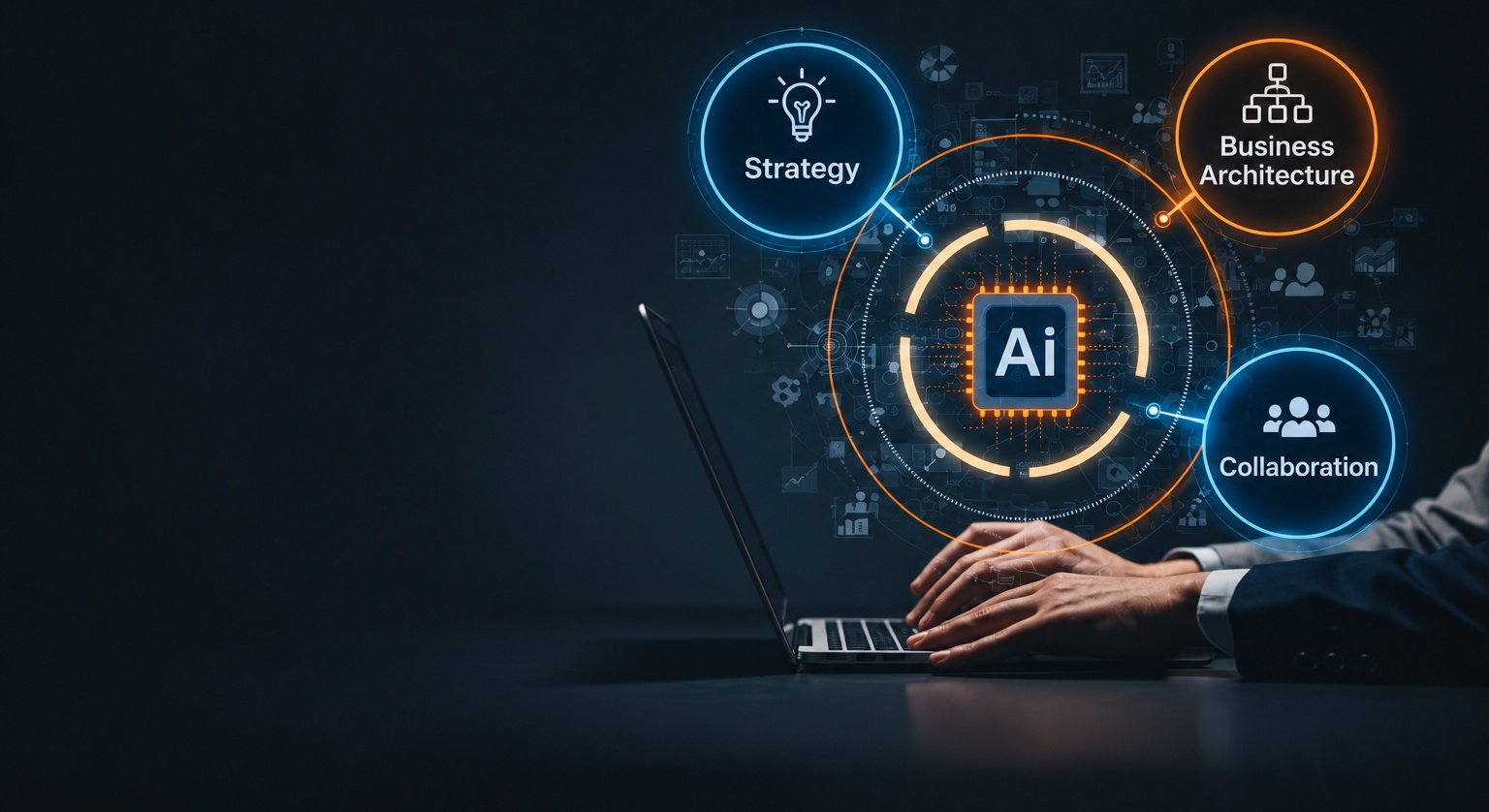
Artificial Intelligence has become impossible to ignore – who owns the value?
Every board discusses it. Every executive team has it on the agenda. Vendors promote it, consultants advocate it, investors reward it, and governments attempt to regulate it.
Yet despite the enthusiasm, surprisingly few organisations can genuinely claim to have transformed themselves through AI. Many have launched pilots, established AI teams, developed AI strategies, and collected promising use cases. Few have translated this activity into sustained business value. The reason is rarely the technology itself.
Most organisations can access the same AI capabilities, foundation models, cloud platforms and talent pools. As AI becomes increasingly accessible, technology alone is becoming less of a differentiator. The real challenge lies elsewhere…
It lies in an organisation’s ability to align strategy, market realities, culture, investments and execution around a common direction. For all the discussion about intelligence models, co-pilots, agents and automation, AI is ultimately not a technology challenge, it is equally an organisational challenge.
The technology often emerges faster than the organisation itself. Technology projects are often assigned to a project manager. Far fewer organisations can identify a clear value owner responsible for ensuring that expected benefits are actually realised after implementation within specific stages of value streams.
The Four Roles We Meet in Every AI Discussion
Whenever AI enters the executive conversation, a number of familiar perspectives tend to emerge. Some focus on short-term goals, others on long-term goals. The optimum is often a blend of both, to balance emergent opportunities with strategic intent for long-term targets.
We can easily work with archetypes for AI Roles to express this dynamic. This is a useful exercise.
- The first of the four roles is the AI Pioneer. This is the individual fascinated by possibility. They see opportunities everywhere. They experiment, explore, and challenge established ways of working. Their instinctive question is simple: What is possible? The Pioneer plays a critical role. Without experimentation there can be no innovation. Without innovation there can be no transformation. However, the Pioneer often underestimates the complexity of organisational change. Building something is not the same as implementing it successfully across an enterprise.
- The second role is the Protector. The Protector asks a very different question: What might we lose? Whilst others discuss opportunity, the Protector thinks about trust, fairness, governance, security, compliance, and people. The Protector understands that organisations are built upon relationships and culture, and that these assets can take years to build and minutes to destroy.
The Protector is not opposed to innovation. Quite the opposite. The Protector is attempting to ensure that innovation remains sustainable with the people that are the organisation. - The third role is the Veteran. The Veteran has seen previous technology revolutions come and go for years, hence the role name. They remember digitalisation, ERP transformations, Y2K challenge, cloud migrations, business intelligence programmes, blockchain initiatives, and countless other waves of innovation. The Veteran brings perspective. They remind organisations that technology alone rarely creates value. Real value emerges through adoption in business, through daily execution, with leadership-support, and organisational change. Their challenge is recognising when history is repeating itself and when something genuinely new is happening; have we tried this before? All three roles contribute important perspectives. Yet organisations often struggle because these perspectives pull in different directions.
- This is where a fourth role becomes essential: the Business Architect. Often operating through the lens of modern Enterprise Architecture, the Business Architect acts as the integrator between innovation, governance, experience, and business value. The Business Architect asks a different question altogether. How do we turn all of this into sustainable business value? Unlike the Pioneer, the Protector, or the Veteran, the Business Architect is not trying to win the argument. Instead, the role focuses on creating alignment between perspectives that would otherwise compete with one another.
The Business Architect understands that innovation without adoption rarely succeeds. Governance without innovation rarely creates growth. Experience without change can become stagnation.
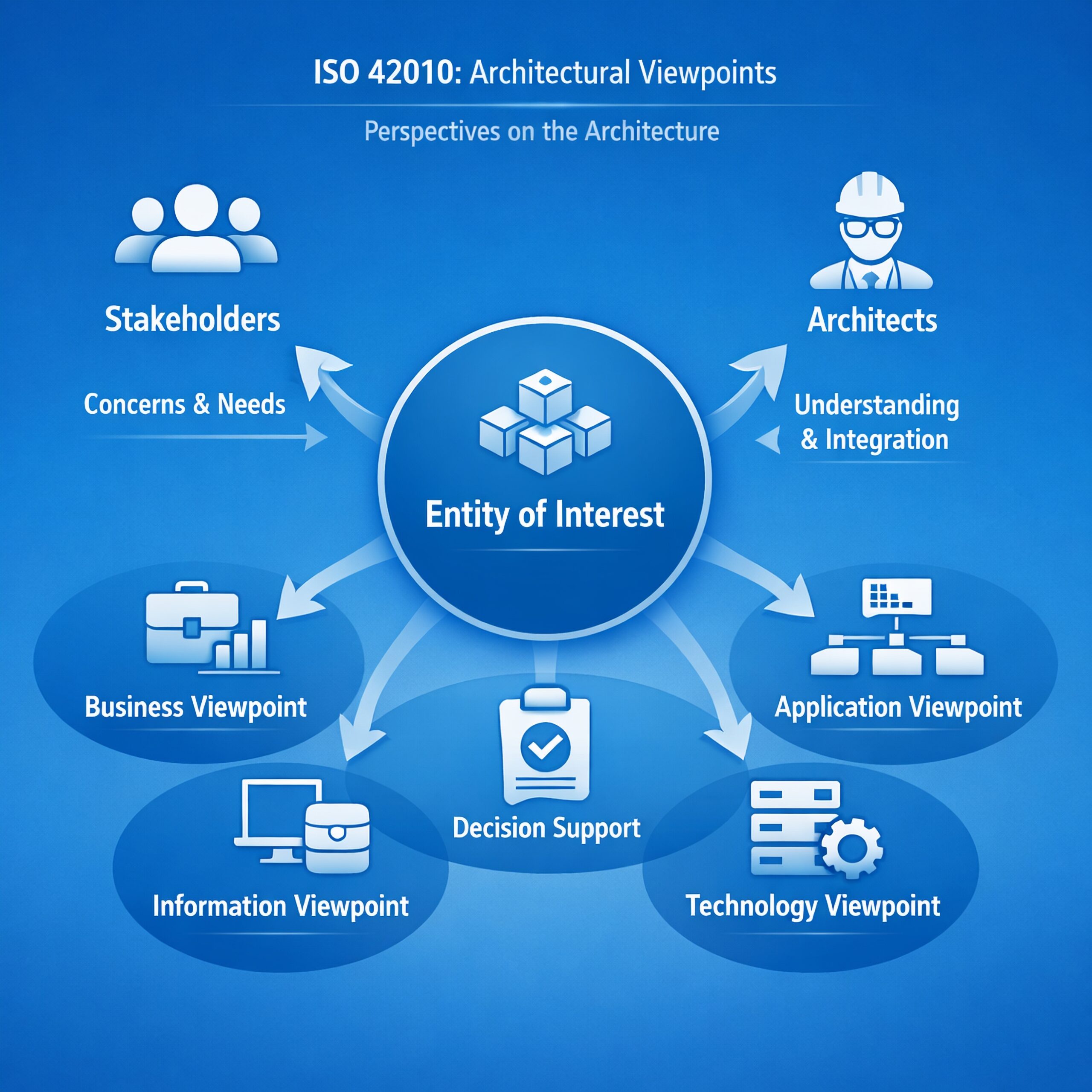
The challenge is therefore not choosing between these viewpoints, but creating balance between them. This is where modern Enterprise Architecture becomes particularly important. This is the structural solution to accelerating digital complexity.
Contrary to popular belief, modern Enterprise Architecture is not primarily about repositories, diagrams, frameworks, or documentation. Its true purpose is to create transparency and connectedness across the organisation.
It helps leaders understand how strategy connects to value creation, investing in preferred capabilities, how capabilities support processes and value stream stages, how initiatives then contribute to outcomes as value realised, and how investments ultimately create value long after the business case was approved. This is precisely the challenge that Next-Insight has been designed to solve.
By connecting strategy, value streams, capabilities, investments and value ownership, Next-Insight helps organisations identify not only where AI can be deployed, but where it can create measurable business value.
The Business Architect helps organisations balance short-term operational realities against long-term strategic opportunities, ensuring that innovation and value creation remain connected rather than competing priorities.
This is precisely the type of business alignment that Next-Insight is designed to support. Rather than treating Enterprise Architecture as a specialist activity performed by a small group of people, Next-Insight enables leaders, managers, service owners and project owners to co-create and continuously refine a shared understanding of the business very easily. Unlike traditional architecture repositories, it encourages participation rather than documentation alone.
In the context of AI, this becomes increasingly important. AI initiatives cannot succeed when they are isolated from strategy, disconnected from business capabilities, or detached from organisational reality.
Why Many AI Programs Struggle
Most AI initiatives do not fail because the technology is incapable. They struggle because they become disconnected from the organisation or are not related to value streams and where value creation is owned.
AI teams are established. Pilots are launched. New technologies are tested. Yet strategy, operations, culture and leadership often remain poorly aligned. The result is predictable: Organisations see activity, but not always see value created. Return on investment becomes difficult to demonstrate, and AI itself is often blamed when the real issue is organisational alignment.
AI is not a single technology, nor a single form of intelligence. Different AI capabilities solve different business problems and require different levels of governance, adoption and organisational change.
Understanding these distinctions is essential if organisations want to move beyond experimentation and towards sustainable value creation.
For a deeper discussion, readers may wish to explore our companion article on the different forms of intelligence in AI and how they support different organisational needs.
Why Enterprise Architecture Comes Before AI
Perhaps the greatest misconception surrounding AI is the belief that AI transformation begins with AI. It should not. It begins with clarity: Clarity of purpose, strategy and value.
Before deciding which AI solution to implement, organisations should first understand which capabilities they wish to improve, which outcomes they seek to achieve, and what organisational changes are required to realise those outcomes as value ideally within the value streams.
This is why we frequently argue for an EA-first approach to AI transformation. Not because Enterprise Architecture (EA) replaces AI. Not because architecture should slow innovation. But because architecture provides the transparency, alignment, governance, and connectedness required to ensure that innovation creates most business value per spend with living digital portal.
This is also why Next-Insight has become an important enabler for organisations seeking to navigate AI transformation. By connecting strategy, capabilities, value streams with initiatives, risks, stakeholders, and outcomes, it provides a practical framework for translating AI ambitions into coordinated structured action. AI remains one of the most significant opportunities facing organisations today.
The challenge is not whether AI matters; It has already arrived and continues to evolve at high pace. The challenge is ensuring that strategy, market realities, culture, leadership, and execution move together where it given resource and spend constraints, matters the most. When cohesion is adopted, AI becomes more than an interesting technology experiment. It becomes a genuine source of competitive advantage. And that is usually the moment when the AI prophets have left the room, and the Business Architect has turned AI into realised value.
Reach out for a dialogue or demonstration of how Next-Insight can help connect strategy, value streams, capabilities, and AI initiatives, ensuring that AI is adopted where it creates the greatest value to valuable business transformation. Book a demo here.