From AI-Driven to strategically led
I see so-often CxO’s talk about “AI-driven”; it is like buying IBM in the old days, that is job-safe to articulate “We are AI-driven”.
Every manager I meet talks about “AI-first” as it was the golden recipe for future. They are right about one thing: if you have ambitious growth targets, AI will almost certainly be part of the answer; only very few and smaller organisations will be able to scale at high speed without leveraging AI.
But that does not make AI the strategy! It does not make AI the destination! And it certainly should not make AI the driving force behind the organisation. Before deciding where AI should be applied, leaders must first understand where they want to go, which stakeholder outcomes matter most, which capabilities differentiate them, and how “value” as seen from CEO is created across the enterprise.
The important message here is, that is not an AI question! That is a strategy and Enterprise Architecture question!
The danger of an AI-first mindset is that it often skips directly to acceleration and high-speed before creating alignment and common direction. Organisations rush into co-pilots, agents, automation and models without establishing ownership, shared understanding, trusted information or a common direction with people-support in the organisation.
Agreed, AI has been impossible to ignore, but but it cannot tell an organisation what is worth executing. Modern Enterprise Architecture starts with a different question:
What are our stakeholders trying to achieve? and how do we align the enterprise around delivering it?
The Modern EA Practice Securing Sustainable Growth
For years, Enterprise Architecture has been associated with large repositories, endless discussions about standards and notations, or maybe even multi-year roadmaps that often became outdated before they were delivered. These practices served organisations reasonably well in a world where change happened very slowly.
That world no longer exists. Today, organisations operate in an environment where market conditions can change overnight, new technologies emerge continuously, customer expectations evolve rapidly, and AI is reshaping industries at unprecedented speed. In this environment, the challenge is no longer creating the perfect architecture. The challenge is enabling continuous adaptation.
This is where Modern Enterprise Architecture, often referred to as Adaptive EA, fundamentally differs from its predecessor. Rather than focusing on documenting the enterprise, adaptive or modern EA focuses on understanding stakeholder outcomes, creating shared understanding, and helping organisations continuously align decisions, investments, capabilities and initiatives around the value they seek to create.
The goal is no longer to define a static future state. The goal is to create the organisational awareness and coordination needed to navigate an uncertain future with confidence.
Architecture becomes less about models and more about decision support. Less about documenting and more about accountabilities and guidance. Less about control and more about coordination. Modern platforms such as Next-Insight help turn strategy, capabilities, investments and initiatives into a shared source of enterprise intelligence rather than yet another architecture repository. This is what we often call the red-carpet more than the red-tape.
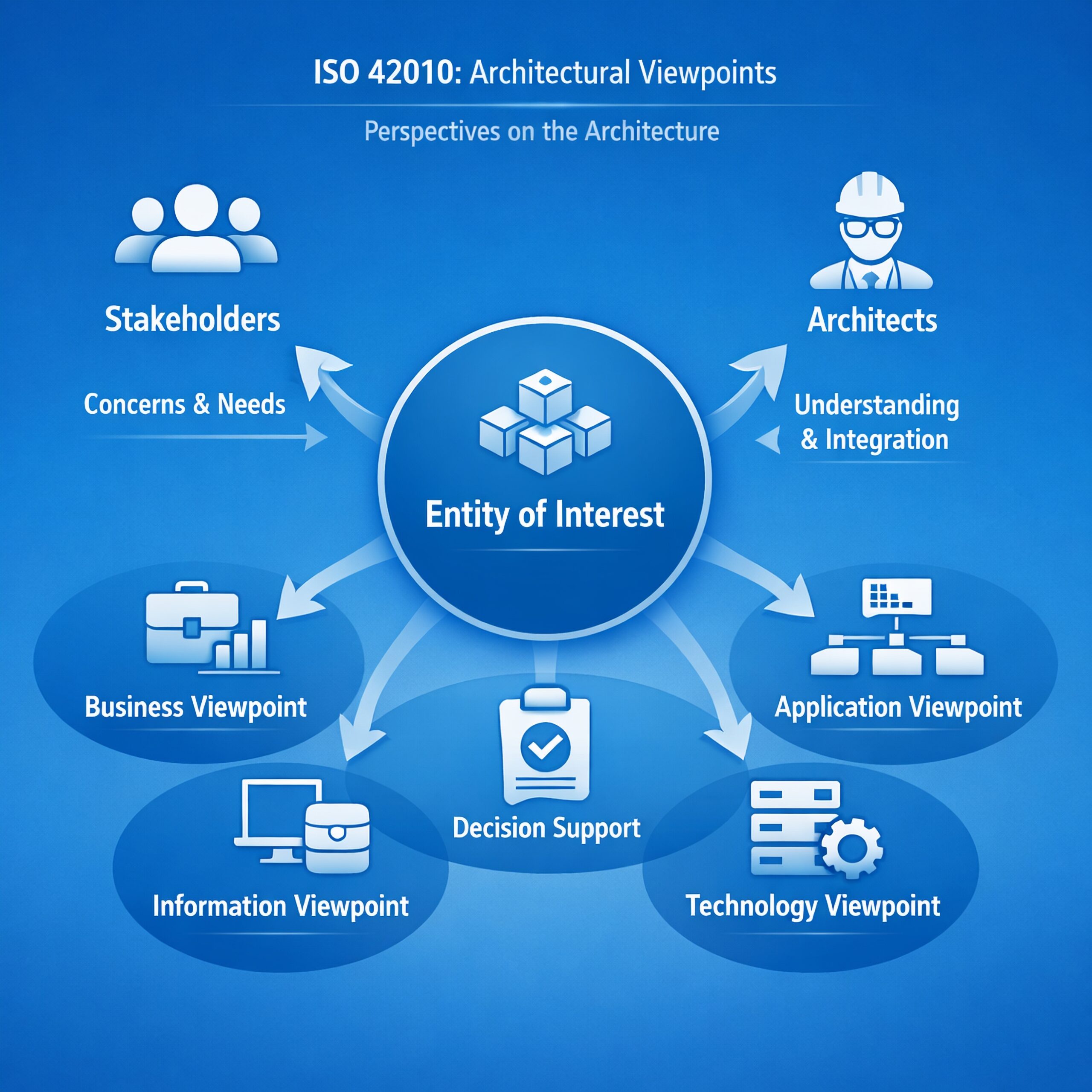
In many ways, Modern EA acts as the connective tissue between strategy, people, information, technology and increasingly AI. It helps organisations translate ambition into focused action and continuously adapt as conditions change.
The Wrong Question
Many organisations begin AI transformation efforts by asking: “What AI should we implement?”, “let us pilot something”, or “How do we become AI-first?”. These are understandable questions, but they are rarely the right starting point. The organisations creating sustainable change and extraordinary results start somewhere else. They begin by asking a much more fundamental question:
What value are we trying to create for our stakeholders?
That question immediately shifts the conversation. Which customers do we want to serve? Which markets do we want to grow in? What is the magnitude of growth? Which capabilities will differentiate us from our competitors? What skills must we develop? Which partners are critical to our future success? What risks and regulations must we prepare for? And ultimately, how must the enterprise evolve to achieve these ambitions?
Only once these questions have been answered does it make sense to ask where AI can create the greatest impact. AI is largely an amplifier of good or bad data. It can hallucinate, and while it offers remarkable capabilities in forecasting, recommendations and identifying gaps in information, it is still dependent on the context provided to it.
Because if we cannot clearly explain the value we seek to create, we cannot identify the right capabilities, prioritise investments, design meaningful transformations, establish ownership, or leverage AI effectively.
If we see AI as technology, technology is never the destination. Technology is an enabler, so is AI. Just a very sophisticated set of technologies. Value is the destination. Strategy provides the ambition. Enterprise Architecture acts as the bridge between strategic intent and coordinated execution. AI can amplify where applied, like an acceleration of the good and bad behaviours.
The excitement surrounding AI is understandable
The excitement surrounding AI is understandable. AI can automate tasks, identify patterns, generate insights and accelerate decision-making.
But AI also amplifies existing organisational realities. If processes are unclear, AI scales confusion. If data lacks context, AI scales misinformation. If strategy is fragmented, AI accelerates fragmentation. AI can make organisations move faster. It cannot guarantee they move in the same direction.
This is why an AI-First strategy is often incomplete; most AI initiatives fail, some quote 95% fail on delivering ROI. Before organisations automate decisions, they must understand how value is created, which outcomes matter most, where critical decisions are made, and how people, capabilities, processes and information are connected across the enterprise. That understanding is precisely the role of adaptive Enterprise Architecture. Adaptive or modern Enterprise Architecture provides the context that AI needs to become truly valuable. It creates transparency around ownership, capabilities, value streams, processes, information and strategic objectives. It helps organisations move beyond isolated data points and towards a shared understanding of how the enterprise operates and where it intends to go.
Without this EA context, AI can generate new insights and answers. With this context, AI can generate meaningful recommendations and make decision-support. As organisations increasingly rely on digital models, connected metadata and continuously updated enterprise knowledge. It becomes the knowledge foundation that helps AI understand relationships, dependencies, accountability and intent.
In many ways, AI is searching for the same thing leaders are searching for: trusted context. The better an organisation understands itself, the more effectively it can apply AI to accelerate transformation, adapt to change and create sustainable value.
From Enterprise Architecture to Enterprise Intelligence
Traditional Enterprise Architecture described the enterprise with as-is and to-be and relatively static roadmaps. Modern Enterprise Architecture helps the enterprise understand itself while it is changing. The outcome is digitally owned metadata and responsibilities that enable better data-driven decision support. Architecture becomes more than a repository; it becomes the trusted source that allows AI to accelerate intelligence. This is one of the key ideas behind Next-Insight: transforming architecture from static documentation into continuously updated enterprise intelligence that supports decisions across strategy, governance and execution.
The Enterprise Architect as an Orchestrator
Many still see Enterprise Architects as technical architects, but EA is about converting strategy and optimisation into realisation. It is to have holism and cohesion as lenses to change rather than to sub-optimize within each project.
Enterprise Architecture connect stakeholder ambitions with operational reality. They connect strategy with execution. They connect people, information, capabilities, technology and increasingly AI. Their role is not to build but ensure alignment between priorities and foster the right direction with an updated set of digital knowledge, like what is easy to do with tool-support such as innovative Next-Insight.
To convert strategic ambition into action, organisations need to shift into modern solutions that act faster, convert complexity into clarity, that allows strategy to convert into coordinated execution. Many still see Enterprise Architects as designers of future-state diagrams; it used to be decades back (some vendors may still sell it though). Yet the today’s business architects do not spend their time drawing models. Instead, they act as translators and orchestrators to get the people of the organisation to update and contribute with insights that are foundation for AI-acceleration.
So, a modern EA will connect business strategy with technology investments. They connect people, information, processes and capabilities. Most importantly, they ensure that everyone involved is working towards the same outcomes. The EA and business architect’s role is not to build. The role is to help others build in the right direction, and where appropriate, with heavy usage of AI.
Living Architecture
The future of Enterprise Architecture is not static. It is living, it is adaptive to the changing current state. Continuously updated through operational insights, strategic decisions, business events, integrations and AI-generated intelligence. Not a collection of documents. Not a shelf full of frameworks. A living representation of how value is created across the enterprise. This is where solutions like Next-Insight can step-change an organisations appetite for strategic led AI-initiatives.
This architecture evolves alongside the organisation. It supports decision-making in real time. It highlights dependencies. It exposes opportunities. It reveals unintended consequences. It helps leaders navigate uncertainty. Architecture becomes wisdom in motion.
Why CEOs Should Care
A CEO rarely asks for more diagrams. A CEO asks:
- How do we grow faster?
- How do we reduce complexity?
- How do we ensure investments create value using AI?
These are not technology questions. These are architecture questions for a strategic mind. Not architecture in the traditional sense. But architecture as the discipline that connects strategy, people, processes, information, technology and AI into a coherent system.
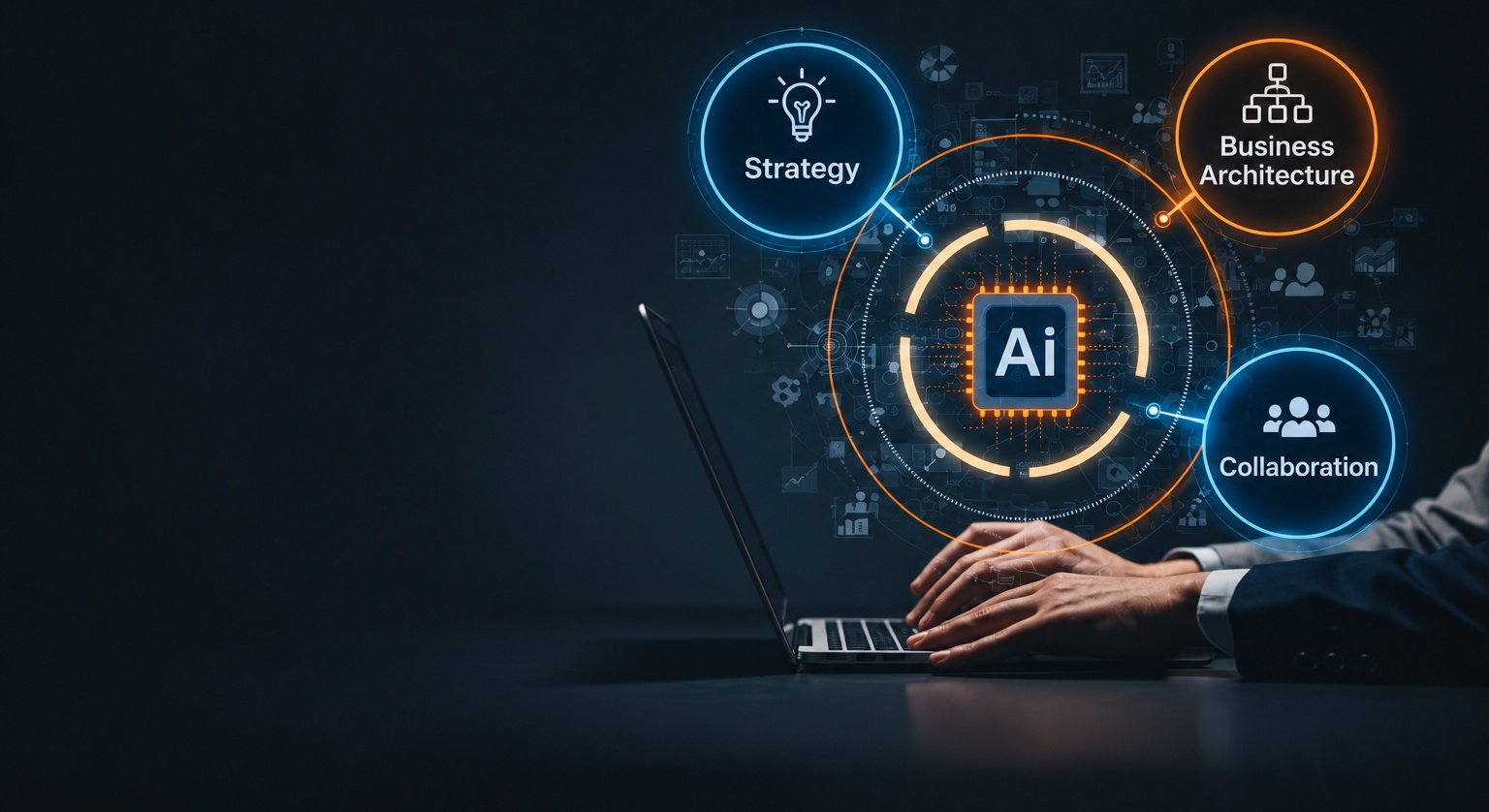
The future belongs to organisations that can continuously sense, decide and adapt. We believe organisations should strengthen Enterprise Architecture to provide the alignment, visibility and governance required to scale AI successfully. The future is not AI-First. The future is Strategy-Led, EA-Driven and AI-Enabled. AI without context creates risk. AI with context creates value. Enterprise Architecture provides the context. AI provides the acceleration.
Platforms such as Next-Insight help organisations connect stakeholder outcomes, strategy, capabilities, investments, roadmaps and execution into a continuously evolving enterprise knowledge foundation. The organisations that will win the next decade will not simply deploy more AI. They will be the organisations that create the clarity, coordination and alignment required to apply AI in the right places, for the right reasons, and at the right time.
Reach out for a dialogue or demonstration of how Next-Insight can help connect strategy, value streams, capabilities, and AI initiatives, ensuring that AI is adopted where it creates the greatest value to valuable business transformation. Book a demo here.