With the rise of AI and data-driven decision-making, the pace of change in Enterprise Architecture is accelerating. Nowhere is this more visible than in the defence domain, where operational tempo, interoperability demands, and system complexity have reached a critical inflection point.
The architectural frameworks themselves have not fundamentally changed. What has changed is the environment in which they are applied. Operational complexity has increased, dependencies have multiplied, and the demand for timely, evidence-based decision support has never been higher. Yet many Unified Architecture Framework (UAF) initiatives continue to struggle—not because UAF is flawed, but because it is still too often applied with an outdated, diagram-centric mindset.
This article is written for the minority: the approximately twenty per cent of defence organisations and architects who have moved beyond static modelling and who are beginning to use UAF, together with NAF, as it is now intended; as a semantic foundation for operational, data-driven architecture.
The Unified Architecture Framework (UAF) has its origins firmly in the defence and systems-of-systems world. Concepts such as missions, capabilities, operational activities, resources, and mission threads emerged from environments where failure was not an option and where coordination across many autonomous actors was essential.
What defence required early, common semantics, traceability across domains, and the ability to reason about change at scale. It is now increasingly required across government and critical infrastructure. Nevertheless, defence remains the domain where UAF is most naturally understood and most rigorously applied.
UAF is therefore not a niche framework. It is a universal architectural foundation, shaped by defence needs and refined for environments where complexity, scale, and accountability are non-negotiable. We rarely see it applied in the wider public sector.
UAF should not be thought of as a tool for end-users, nor as something that business or operational stakeholders must learn. A more accurate metaphor is that UAF provides the skeleton of an architecture platform.
The “skeleton” defines terminology, relationships, constraints, and checkpoints. It has to live on a digital platform. The skeleton ensures that capabilities relate correctly to activities, that activities trace to systems, and that systems align with information and resources. It gives architecture its structural integrity.
What it does not provide is the “flesh“. Defence stakeholders do not operate skeletons. They operate with missions, plans, options, risks, and impacts. They expect consumable, collaborative, web-based interfaces that allow them to explore scenarios and consequences without engaging in modelling theory or notation. Here is essence, UAF is not intended to be taught to end-users. It is intended to enable platforms to translate complex architectural semantics into meaningful, decision-oriented views.
The UAF 1.2 specification makes this intent explicit. It introduces an abstraction layer that separates the underlying UAF metamodel from the presentation layer and states clearly that UAF is intended to be implemented by non-UML and non-SysML tool vendors within their own tools and metalanguages.
This is a decisive statement of direction:
UAF deliberately avoids prescribing how users should interact with architecture, leaving room for innovation in tooling and delivery.
The specification also describes the skeleton for a domain-based metamodel, what “dots” exist and interconnect. This is important. UAF does not attempt to model everything. It focuses on selected domains that are essential for (defence) architecture: strategy, operations, information, resources, and systems. This focus enables depth and rigour without imposing unnecessary complexity.
Many early UAF implementations followed an inside-out approach. Architects worked within the framework, created diagrams to satisfy viewpoints, and attempted to communicate the results outward to operational stakeholders.
Experience has shown the limitations of this approach. Diagrams are costly to maintain, age quickly, and are difficult to operationalise. More importantly, they place the burden of interpretation on the consumer rather than on the platform.
A modern UAF implementation reverses this logic. It is outside-in and use-case driven. It starts with concrete defence questions: mission planning, capability gaps, interoperability risks, transformation options. The architectural data required to answer those questions is then modelled deliberately and incrementally.
The framework follows the use cases; not the other way around.
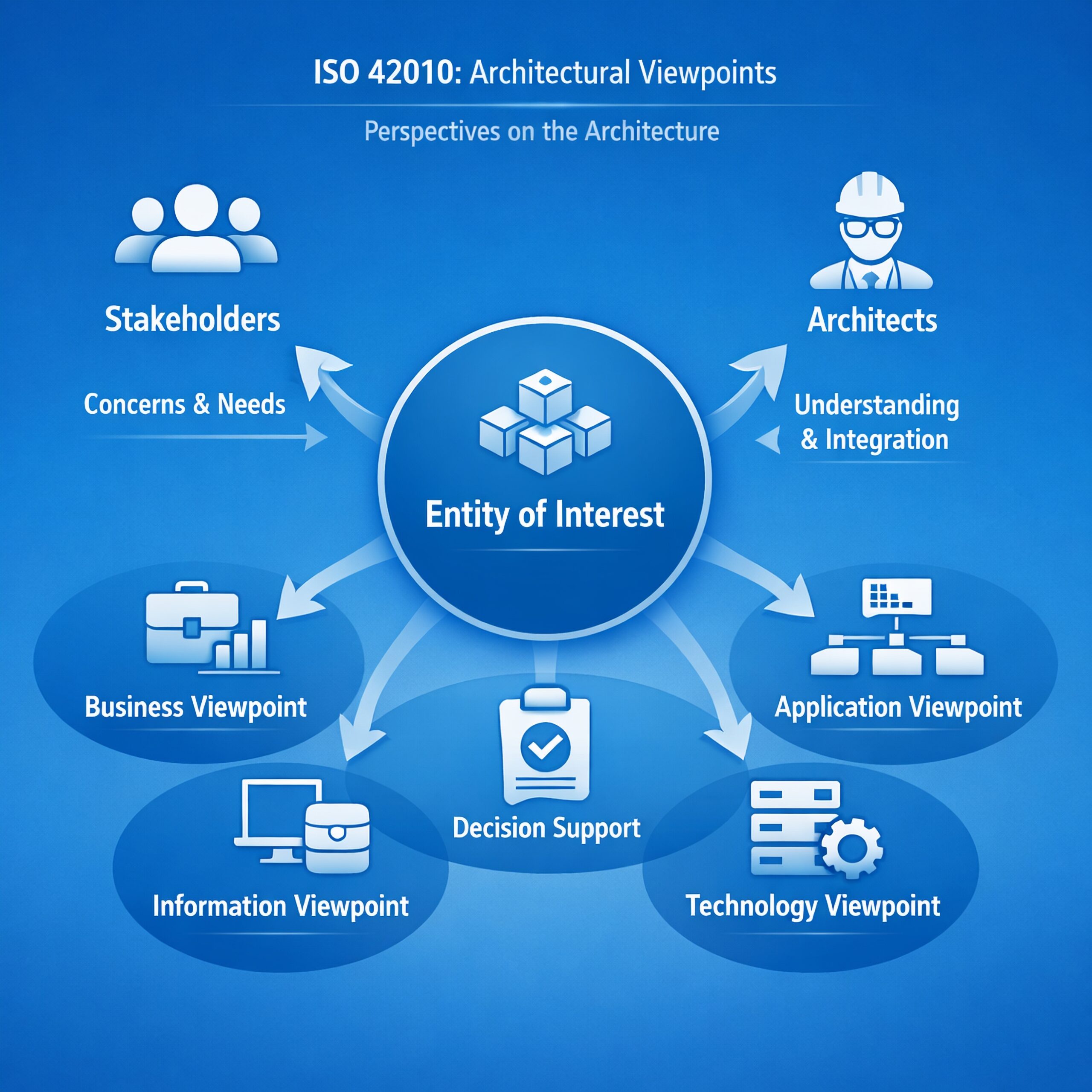
In this modern interpretation, UAF and NAF viewpoints function as checklists for architectural completeness, not as specifications for how architecture must be modelled or presented.
They ensure that relevant concerns have been addressed across domains, but they do not dictate diagram types, notations, or user workflows. Compliance is achieved through semantic coverage and traceability, not through diagrammatic conformity.
This shift is subtle, but it is central to making UAF operational at scale.
This difference in mindset exposes a clear divide between architecture tools.
Civilian EA tools, particularly those based on ArchiMate, were not designed to express the semantic richness required by UAF. Their metamodels and abstractions serve different purposes and cannot easily be extended without compromise.
Conversely, traditional UML-centric tools are capable of representing UAF formally, but often prove impractical for data-driven, collaborative defence architecture. Their emphasis on manual diagramming and specialist usage makes them ill-suited for continuously evolving operational environments.
This is why many defence organisations have adopted model-driven platforms, such as MooD when moving towards data-driven UAF implementations. MooD provides a flexible, model-driven platform capable of hosting UAF-aligned semantics without imposing UML or SysML on end-users. However, case-tools in itself is not the solution.
A platform becomes operational only when it is shaped by purpose-built templates or solutions. It is the templates and solutions well designed around the skeleton of terms, relationships and use-cases with stakeholders that shape cocreation and where UAF becomes indispensable in practice.
Our approach is to build UAF-aligned template and solution on e.g. MooD that deliberately avoid unnecessary complexity. UML remains in the specification, where it belongs, but is not exposed in the user experience unless explicitly required.
This results in what can be described as an “agile UAF” approach: not a reduced framework, but a progressive implementation strategy. Only the parts of UAF that are required to support real use cases are implemented initially. Additional domains and relationships are introduced incrementally as needs evolve. Rigour is preserved, but it is applied where it creates operational value.
Successful defence organisations follow a consistent new pattern. They work more agile, more focus on stakeholders, use-case-driven to collaborate with aligned decisions, with clarity.
They invest in the right platform, but recognise that tools alone are insufficient. They combine that platform with strong, well-governed templates and adopt an agile, iterative approach. Architecture evolves use case by use case, guided by UAF and NAF as reference frameworks rather than as exhaustive checklists to be implemented in full from day one. A modern implementation will act like a digital twin, represent the real organisation to support learning and planning.
Most importantly, they resist the temptation to teach the end-users modelling languages! Instead, they deliver consumable architecture that is easier to understand, easier to maintain, and easier to trust.
UAF remains one of the strongest architectural foundations available to the defence community. Its success, however, depends less on compliance with every element of the specification and more on the mindset with which it is applied.
The organisations that succeed are those that treat UAF as a semantic backbone rather than a diagram catalogue, and that invest in platforms, templates, and practices that translate architectural rigour into operational insight.
They are the twenty per cent who use UAF as it was intended to feel valued and understood. According to Gartner, this leaves around 80 per cent feeling misunderstood or undervalued.
For those exploring a transition towards data-driven, use-case-led defence architecture, we would be pleased to continue the conversation. If you like our leadership, do not hesitate to contact us.
Sign up below and receive a whitepaper on how to start your Business Architecture today. You will receive the whitepaper in your provided e-mail.
*Mandatory fields
Sign up below and receive a whitepaper on how to scale your Enterprise Architecture. You will receive the whitepaper in your provided e-mail.
*Mandatory fields